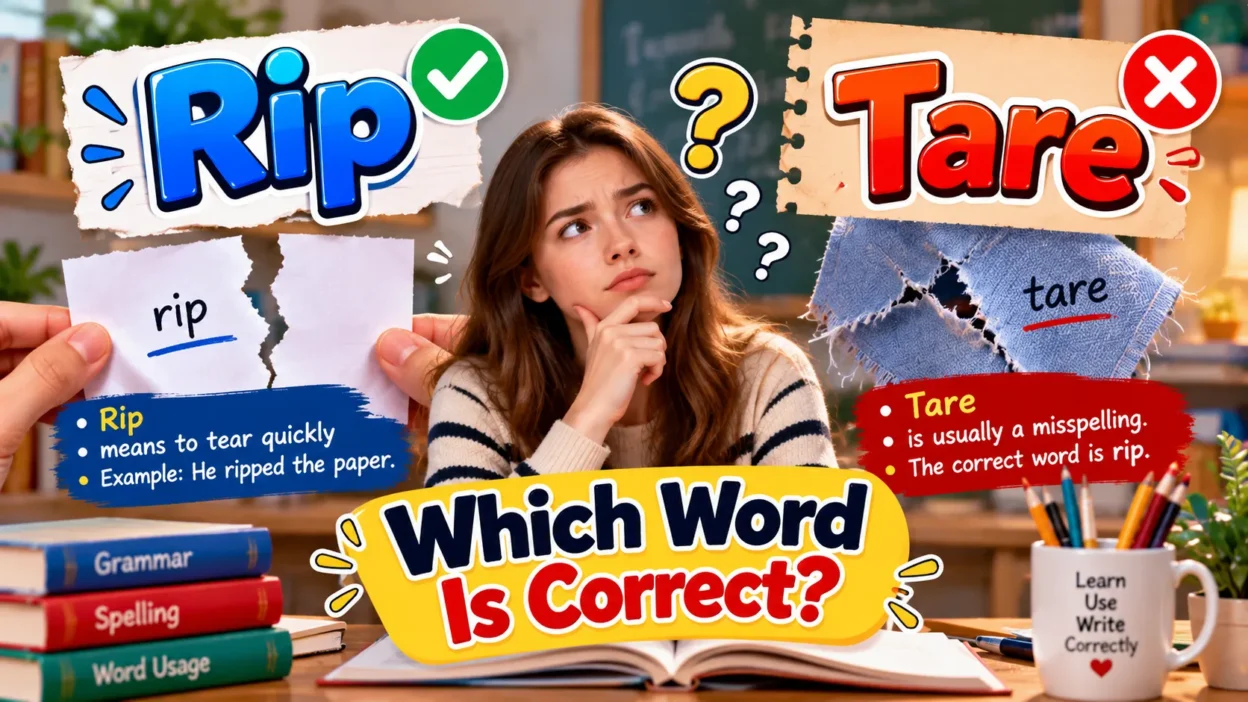
The phrase rip or tare confuses many writers because it combines two words that sound similar but mean completely different things. In most contexts, the correct phrase is “rip or tear”—both words describe the act of pulling something apart by force. However, “tare” is a real word with its own distinct meaning in commerce and shipping. Understanding when to use each word prevents embarrassing mistakes and ensures clear communication.
“Rip” and “tear” function as near-synonyms when describing damage to materials. “Tare,” on the other hand, refers to the weight of a container deducted from the total weight of goods, or it can describe a type of weed. The confusion typically arises from the phonetic similarity between “tear” (meaning to rip) and “tare” (meaning container weight). This guide clarifies the distinction, explores each word’s meanings, and helps you choose the correct term every time.
Quick Answer
The correct phrase is usually “rip or tear,” not “rip or tare.” “Rip” and “tear” both mean to pull something apart by force. “Tare” is a completely different word with two meanings: the weight of a container deducted from goods, or a type of vetch weed. “Tare” never means to rip or damage something. Use “tear” when discussing damage; use “tare” only in shipping, commerce, or botanical contexts.
Meaning Overview Table
| Aspect | Meaning |
|---|---|
| Definition | “Rip” and “tear” mean to pull apart by force; “tare” means container weight or a weed |
| Pronunciation | Rip: /rɪp/; Tear (damage): /tɛər/; Tare: /tɛər/ |
| Part of Speech | Rip: verb/noun; Tear: verb/noun; Tare: noun/verb |
| Usage | “Don’t rip or tear the paper” vs. “The tare weight is 10 pounds” |
| Context | Everyday language (rip/tear); commerce, shipping, agriculture (tare) |
Main Meaning
Definition
“Rip” means to tear or pull something apart quickly and violently. It functions as both a verb and a noun. “Tear” means to separate or pull apart by force, often creating a hole or split. “Tare” has two distinct meanings: in commerce, it refers to the weight of a container or packaging deducted from the gross weight to determine net weight; in botany, it refers to a type of vetch plant or weed.
Origin
“Rip” traces to Germanic roots, likely from Proto-Germanic *rūp- or *reup-, meaning “to pluck, tear, or snatch.” It entered Old English as “rypan,” meaning “to plunder” or “to snatch.” The modern sense of tearing apart emerged in Middle English.
“Tear” comes from Old English teran, meaning “to tear, rend, or lacerate,” with Germanic origins.
“Tare” entered English through Middle French from Old Italian tara, ultimately from the Arabic word ṭarḥa, meaning “that which is removed.” One of the earliest English records appears in the naval inventories of King Henry VII, showing gunpowder weighing “besides the tare” 500 pounds .
Context
The distinction matters in specific contexts:
- Everyday Writing: Use “rip or tear” when discussing damage to paper, fabric, or materials
- Commerce and Shipping: Use “tare” when calculating net weight by deducting container weight
- Agriculture: Use “tare” when referring to the vetch plant or weed
- Gaming and Pop Culture: “Rip and tear” is a famous phrase from the Doom video game franchise
Modern Usage
Today, “rip or tear” appears constantly in everyday language. People warn others not to rip or tear important documents, clothing, or packaging. “Tare” appears primarily in commercial weight calculations, shipping documentation, and agricultural discussions. The phrase “rip and tear” gained cultural prominence through the Doom franchise, which adopted it as a catchphrase originating from a 1996 comic book .
Detailed Explanation
Literal Meaning
Literally, “rip” and “tear” describe the physical act of pulling something apart. A rip often implies a forceful, linear separation, while a tear is a broader term for any split or hole . “Tare” literally refers to the weight of an empty container or packaging—the amount deducted from gross weight to find net weight .
Common Meaning
Commonly, people use “rip” and “tear” interchangeably when discussing damage to materials. You might rip a piece of paper or tear a piece of fabric. The two words function as near-synonyms in most everyday contexts . “Tare” almost never appears in casual conversation unless someone is discussing shipping weights or gardening.
Commercial Meaning
In commerce, “tare” is a technical term. When goods are weighed in containers, the tare weight is deducted to determine the net weight of the actual product. The formula is: Gross Weight − Tare Weight = Net Weight. Historical commercial texts distinguish between several types of tare, including “real or open tare” (the actual weight of the package) and “customary tare” (an established allowance) .
Botanical Meaning
In botany, “tare” refers to a type of vetch plant (genus Vicia), often considered a weed when growing among crops. The word appears in biblical parables about tares growing among wheat, where it symbolizes corruption or false teachings.
Gaming and Pop Culture Meaning
“Rip and tear” became a famous phrase through the Doom video game franchise. The line originated in a 1996 one-shot comic book released by Marvel Comics, where the protagonist declares he will “rip and tear” the guts of a cyberdemon . The 2016 Doom reboot adopted the phrase in its opening sequence: “Rip and tear, until it is done” . This usage cemented “rip and tear” as a recognizable cultural reference.
Examples Table
| Example | Meaning |
|---|---|
| Don’t rip or tear the wrapping paper. | Both words mean to damage by pulling apart |
| The tare weight of the truck is 10,000 pounds. | The weight of the empty vehicle |
| She ripped the letter in half. | Forcefully tore it |
| He tore a page from the notebook. | Removed by pulling |
| The tare is deducted from the gross weight. | Container weight subtracted |
| Be careful not to tear your dress. | Damage the fabric |
| The tares grew among the wheat. | Weeds in the crop |
| Doomguy said, “Rip and tear!” | Video game catchphrase |
| The fabric has a small rip. | A tear or split |
| Calculate the net weight after subtracting tare. | Commercial weight calculation |
Related Meanings Table
| Related Term | Meaning |
|---|---|
| Rip | To tear or pull apart forcefully |
| Tear | To separate or pull apart by force |
| Tare | Container weight; vetch weed |
| Gross weight | Total weight including packaging |
| Net weight | Weight after deducting tare |
| Tret | Historical allowance for waste (obsolete) |
| Cloff | Historical weight allowance (obsolete) |
| Vetch | A climbing plant; tare is a type of vetch |
| Rip and tear | Doom franchise catchphrase |
| Shred | To tear into small pieces |
| Rend | To tear violently |
| Split | To divide or separate |
| Snag | To catch and tear on something |
| Lacerate | To tear or cut roughly |
| Riving | Splitting or tearing apart |
Common Uses
People use “rip” and “tear” in countless everyday situations. Parents warn children not to rip or tear books. Shoppers check packaging for rips or tears. Crafters carefully tear paper for projects rather than cutting it. These words appear in instructions, warnings, and casual conversation constantly.
“Tare” appears in more specialized contexts. Shippers and freight workers calculate tare weight to determine shipping costs. Farmers and gardeners discuss tares as weeds. Commercial documents and invoices include tare weight fields. Scales in laboratories and kitchens have a “tare” button that resets the display to zero, subtracting the container’s weight—a related but distinct usage of the term .
The phrase “rip and tear” appears in gaming discussions, memes, and fan communities. Doom fans quote it, merchandise features it, and the 2016 game named its first level after it .
Common Mistakes
| Mistake | Correction |
|---|---|
| Writing “rip or tare” when meaning damage | Write “rip or tear” for damage to materials |
| Using “tare” to mean “tear apart” | “Tare” never means to rip or damage |
| Confusing “tare” with “tear” in everyday writing | Use “tear” for pulling apart; “tare” for weights |
| Spelling “tear” as “tare” in damage contexts | The correct spelling for damage is “tear” |
| Assuming “tare” is always wrong | “Tare” is correct in commercial and botanical contexts |
| Using “tare” in gaming references | The phrase is “rip and tear,” not “rip and tare” |
| Forgetting the tare weight in shipping calculations | Always deduct tare from gross to find net weight |
| Pronouncing “tare” differently from “tear” (damage) | Both are pronounced /tɛər/ |
| Using “tare” as a verb meaning to damage | “Tare” as a verb means to weigh or deduct tare |
| Confusing the weed with the weight term | Context determines which meaning of “tare” applies |
Related Questions
Is it rip or tare or rip or tear?
The correct phrase for damage is “rip or tear.” “Tare” is a completely different word referring to container weight or a weed. Use “tear” when discussing pulling something apart.
What does tare mean?
“Tare” has two meanings. In commerce, it refers to the weight of a container or packaging deducted from gross weight to determine net weight. In botany, it refers to a type of vetch plant or weed.
Why do people confuse tear and tare?
“Tear” (meaning to rip) and “tare” (meaning container weight) are homophones—they sound identical. This shared pronunciation leads to spelling confusion.
What is tare weight?
Tare weight is the weight of an empty container or packaging. Shippers and merchants deduct tare weight from gross weight to calculate the net weight of goods.
Is “tare” a real word?
Yes, “tare” is a legitimate English word with origins in Arabic, French, and Italian. It has been used in English since at least the reign of King Henry VII .
What is the Doom “rip and tear” quote?
“Rip and tear” is a phrase from the Doom video game franchise. It originated in a 1996 comic book and was popularized by the 2016 Doom reboot, which used it in the opening sequence .
FAQs
Is it “rip or tare” or “rip or tear”?
The correct phrase for damage is “rip or tear.” “Tare” is a different word with commercial and botanical meanings. Never use “tare” to mean pulling something apart.
What does tare mean in shipping?
In shipping, tare refers to the weight of the container, packaging, or vehicle. Shippers deduct tare weight from gross weight to determine net weight—the actual weight of the goods.
Can tare mean to rip?
No. “Tare” never means to rip, tear, or damage. That meaning belongs exclusively to “tear.” “Tare” as a verb means to weigh or to deduct tare weight.
What is the difference between tear and tare?
“Tear” (pronounced /tɛər/) means to pull apart or damage. “Tare” (also pronounced /tɛər/) means container weight or a weed. They sound identical but have completely different meanings.
Where did the phrase “rip and tear” come from?
The phrase originated in a 1996 Doom comic book. The 2016 Doom reboot adopted it as a catchphrase, using it in the game’s opening sequence .
Is “tare” used in cooking?
Yes. Kitchen scales have a “tare” button that resets the display to zero, subtracting the weight of the container so you can weigh only the ingredients.
What is a tare in the Bible?
In biblical parables, tares are weeds that grow among wheat. The parable of the wheat and tares symbolizes the coexistence of good and evil until the final harvest.
Conclusion
The rip or tare confusion stems from a simple homophone problem. “Tear” and “tare” sound identical but mean completely different things. When discussing damage, the correct phrase is “rip or tear”—both words describe pulling something apart by force. “Tare” belongs to the worlds of commerce and botany, referring to container weight or a type of weed. Remember the rule: if you’re talking about ripping or damaging something, use “tear.” If you’re calculating shipping weights or discussing plants, use “tare.” This simple distinction prevents errors and ensures your writing communicates exactly what you intend.

Clara Morgan is a language and vocabulary writer passionate about making English easier to understand. At Wordestic, she creates clear and practical guides on word meanings, synonyms, antonyms, grammar, word differences, and commonly confused words.
Her writing focuses on simple explanations, useful examples, and everyday usage to help readers expand their vocabulary and communicate with greater confidence.


